

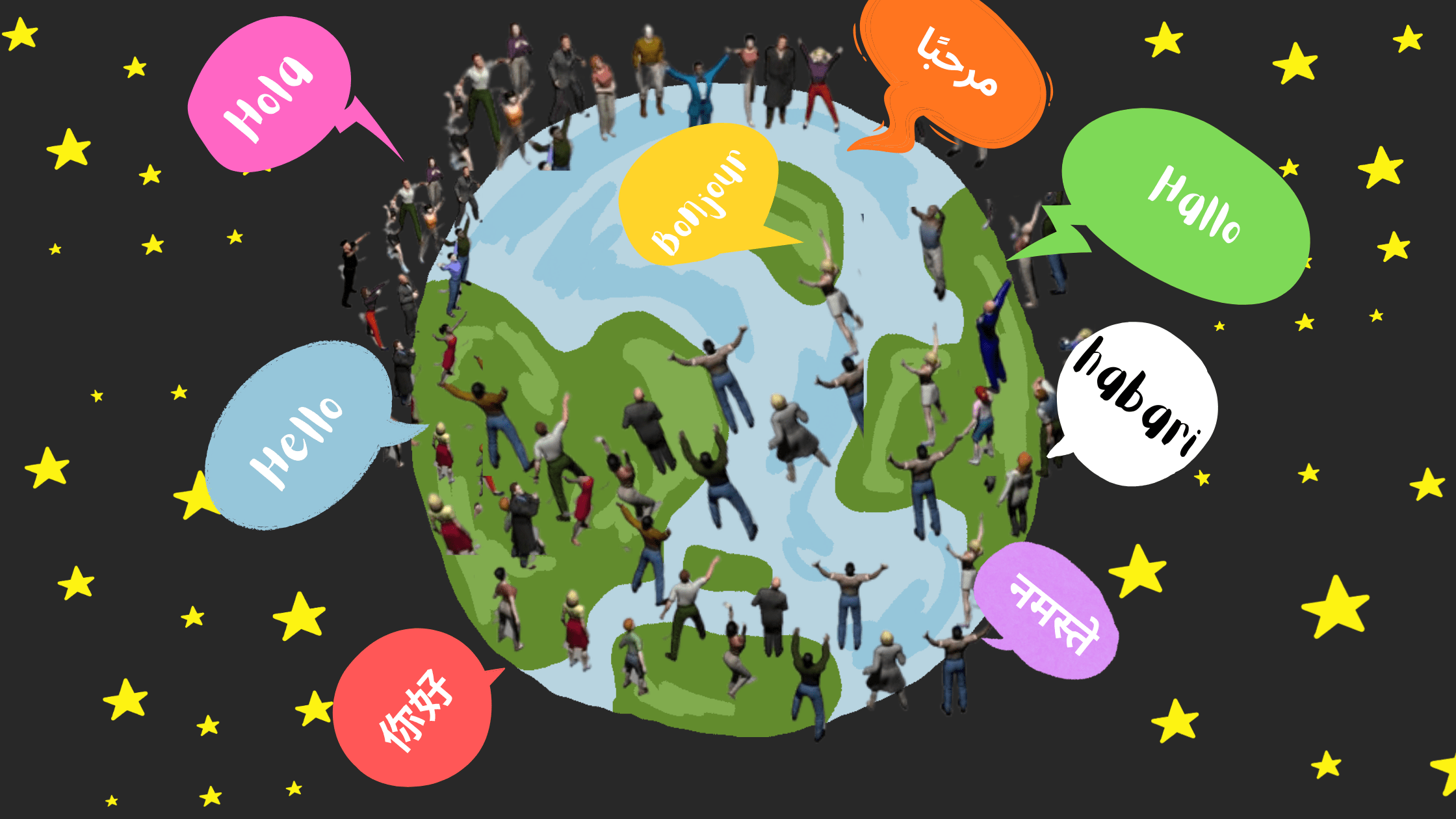
As International Mother Language Day is celebrated each year on February 21, schools organize cultural performances, students wear traditional clothes and social media is filled with messages about linguistic and multilinguistic pride. Established by UNESCO, it aims to encourage linguistic diversity and remind the world that languages are not just tools of communication, but carriers of history, identity and culture. But beyond the celebrations, an uncomfortable question arises: in an increasingly globalized world, are home languages quietly losing their place in daily life?
To explore this, we asked some students at ICSA whether they speak their home languages fluently. Most responded ”no”. Some even said “I think in English now.” Another student said, “Sometimes I forget words when I talk to my family back home. I feel excluded because I mostly don’t understand what my family is talking about.” These words reveal a subtle but significant reality. For young people, the language they learned and used as a child is slowly becoming secondary, replaced by the language of learning, socializing and globalizing.
This situation is referred to as language attrition also known as the loss of proficiency when a language is no longer used on a regular basis. It is a slow, quiet and almost invisible process, but one that is very personal. In learning environments, social interactions and even online communities are using popular languages like English more and more, while home languages are only being used when talking to family or during cultural events. Over time words become harder to remember, complex ideas harder to express and even expressing some emotions feel harder.
The trend towards being able to speak global languages is undeniably a positive one, as English and other widely spoken languages are key in accessing educational opportunities, employment and global collaboration. Many students are even able to move between two, three or four languages easily, a talent that is very important in education. However, the dominance of a world language can lead to an imbalance. When it comes to social acceptance, academic success and future opportunities which favors a single language, other languages gradually become pushed away from our daily life. While proficiency can be managed, the confidence levels drop, jokes and emotional expressions in the home language become difficult to access.
Home Languages are more than just functional tools, they are cultural anchors. They carry history, traditions and memory. Losing proficiency, even if it’s only partial, can create a sense of disconnection from one’s roots. The celebration of International Mother Language Day reminds the world of the significance of linguistic diversity. However, the day also reveals that just celebrating our languages is not enough, they need to be protected.
Some families actively use their languages at home, reading books, telling stories and encouraging their kids to think and talk in their home language. Yet for many internationally mobile children, their lives are conducted in a dominant global language- in the class, socializing and online. Over time, the language learned first can lose ground as it is not used as often, any longer.
As student interviews suggest, this shift is gradual but noticeable.This means that it is not just up to families to keep their languages alive. International schools say they are all about diversity and global citizenship, but to what extent are they proactively protecting the linguistic identities of their students? To what extent are they actively working to ensure that the diversity that exists within their walls is simply not celebrated once a year but is instead a part of how they teach and run their school? When academic success is tied primarily to one dominant language, mother tongues might survive socially but weaken intellectually.
The challenge is not to resist global communication, the ability to speak multiple languages is an incredible quality. The question is whether international schools can prepare students for a future while also preserving their cultural heritage. Supporting home languages requires more than encouragement, it requires space value and recognition within educational systems.
International Mother Language Day is a day to reflect on because of its complexity. In international learning settings, where cultural backgrounds are varied but the learning language is common, the preservation of linguistic identity demands a deliberate effort.
When the celebrations are over and everything goes back to normal we see that language is a part of who we are. It affects how we think, how we feel and where we belong. Education systems must ask themselves: are they equipping students to succeed internationally while also protecting the language that first shaped their identity or just for show?
In preparing students to be global citizens, how can international schools ensure that students do not quietly become strangers to their own linguistic heritage?

