

Week Without Walls is a time when students get to expand their learning outside of classrooms; whether it’s day trips, or night trip camping. However, Week Without Walls is not all about learning. Week Without Walls at its core, is about having fun, relaxing, and creating lasting memories with friends outside of school. This year, for the Grade 10’s day trip, they visited the Atelier Adinkra in Grand Bassam.
Atelier Adinkra is a ‘cultural hub’ that helps preserve Adinkra symbols, whilst also teaching visitors how to wax print these symbols on Batik fabric. This Atelier keeps the traditional art alive while still sharing it’s meaning with upcoming generations. At Atelier Adinkra, they blended enjoyment and learning while learning all about the deep cultural meaning of Adinkra.
What are Adinkra Symbols?
Adinkra symbols have been around for over 200 years. They originate from Ivory Coast and were created by the Gyaman people as part of Akan culture. The Akan people are West Africans primarily from Ghana and Côte d’Ivoire, known for their traditional art, matrilineal systems, and structured government.
In today’s globalized world, traditional Adinkra symbols risk being overlooked, or reduced to simple artistic patterns. However, Adinkra symbols continue to hold relevance, especially for younger generations seeking to understand their identity and cultural roots. Adinkra Symbols are increasingly seen in modern fashion, graphic design, architecture, and even branding, blending tradition with contemporary expression. While modernization has changed how these symbols are used, it has also created opportunities for their revival.
Adinkra symbols are a form of non verbal communication. This is why people wear them on their clothes, both on joyous occasions and in difficult times. Besides clothing, the symbols are also used as a decoration in homes, often seen on doors and sculptures.
This is also a way for people to highlight their values. The symbols are linked both religiously and spiritually, as they give order to the community and showcase their values. There are also several symbols that speak to God, which are the spiritual side of the symbols.
How they’re used
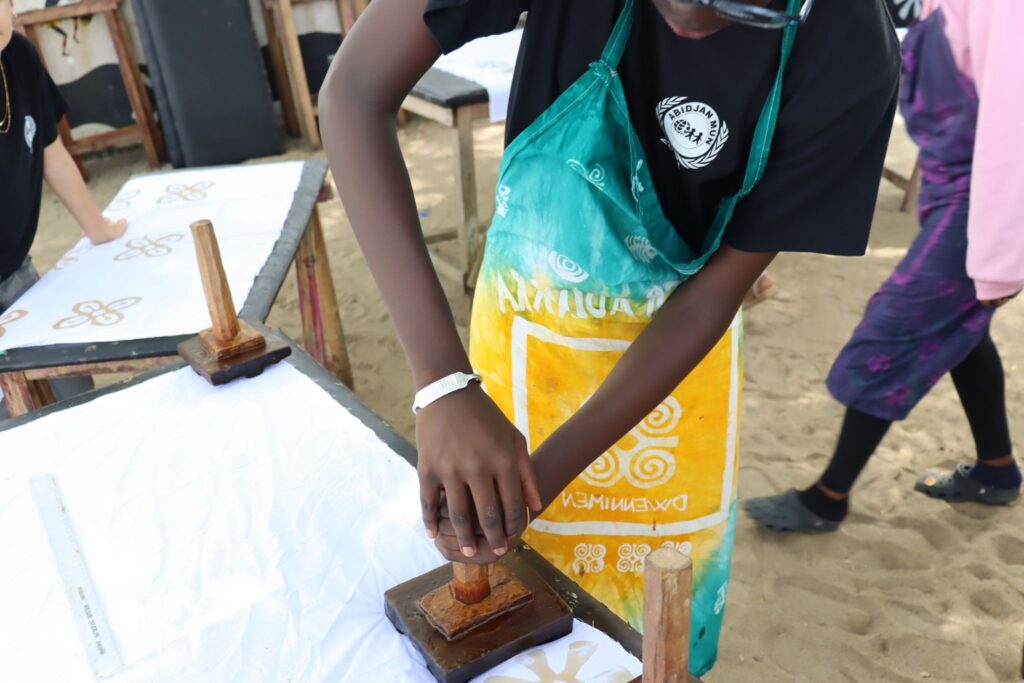
At Atelier Adinkra, the Grade 10’s learned about the uses of Adinkra symbols, using Adinkra stamps on pagnes to print designs.
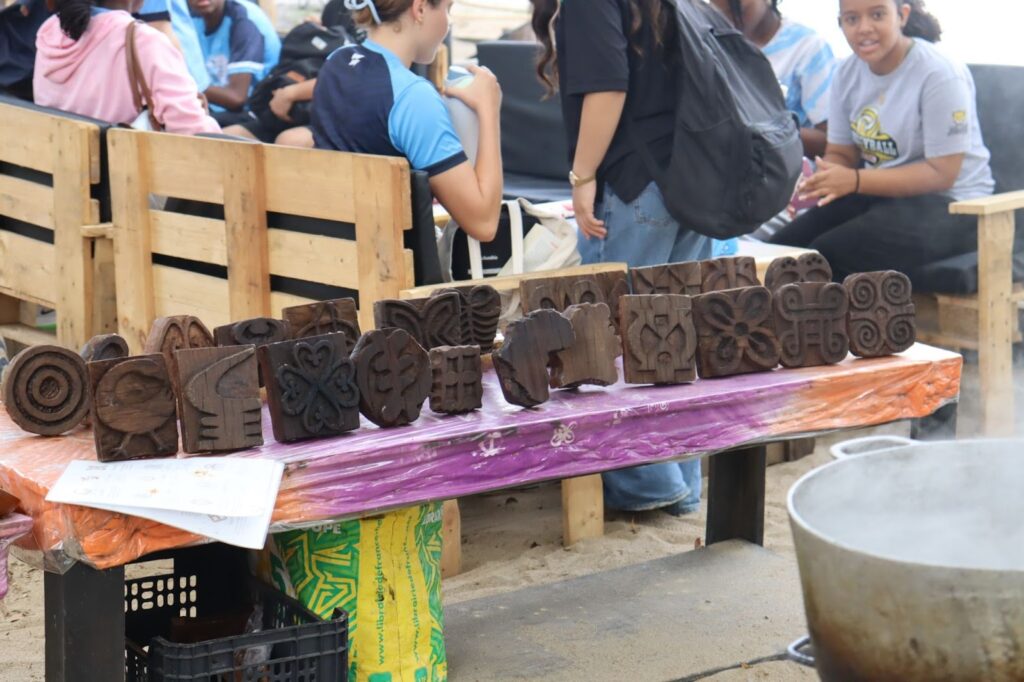
To make pagne, the Grade 10s first drew a border (around 4cm thick) around a plain white cloth. They then used a special wooden stamp, with a corresponding Adinkra symbol engraved into it, dipped it in molten wax, and printed it onto the white fabric before later dyeing it , using different colours for various results.
Beyond the cultural knowledge gained, the workshop offered students a hands-on learning experience. Rather than simply observing history,the Grade 10 students actively participated in preserving it. The careful process of stamping molten wax onto fabric required patience. Allowing students to appreciate the skill involved in traditional craftsmanship.
Working side by side also encouraged collaboration and discussion, as many students shared ideas about symbol placement and meaning. Many students found the experience both relaxing and engaging, offering a break from the fast-paced academic environment of school while still learning something valuable. This balance between enjoyment and education reflects the true purpose of Week Without Walls, creating memorable experiences that extend learning beyond the classroom.
Symbols, and their meanings
Examples of symbols are Akofena, Gye Nyame, & Sankofa.
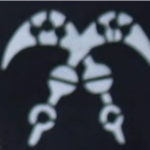
Akofena is about power and being a warrior. Shaped like crossed swords, the symbol is closely linked to warriors and the Akan justice system, symbolizing both physical strength and moral integrity. Akofena emphasizes the idea that true power must be exercised with wisdom, fairness, and restraint. Historically, it was associated with chiefs and leaders, who were expected to protect their people while upholding justice and ethical values. In a modern context, Akofena can also be interpreted as a reminder that leadership (whether in communities, schools, or nations) requires accountability and courage.

Gye Nyame (which translates to Except God) is is one of the most widely recognized Adinkra symbols and represents the omnipotence,and protection of God. The symbol reflects the deeply spiritual nature of Akan culture, emphasizing the belief that nothing happens without divine will.
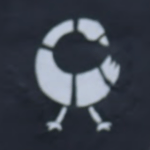
Sankofa is one of the most meaningful Adinkra symbols, representing the importance of learning from the past in order to move forward. Often depicted as a bird looking backward while its feet face forward, the symbol emphasizes reflection, memory, and wisdom.
What did they have to say?
Samuel Aye and EJ were two employees at Atelier Adrinkra, that were asked why they started working for Atelier Adinkra. Aye stated
“It’s about passing down culture and knowledge to the next generation so their values can last”.
EJ expressed that in the beginning it just consisted of printing on batik fabric without the Adinkra symbols. Until later another employee suggested printing the symbols like in Ghana and in the city. At some point it helped EJ “reconnect with [his] culture and ancestors”, and that’s why he works at Atelier Adinkra.
When Aye was asked whether modernization had impacted the symbols, he claimed that, in a sense, it had, as parents have stopped talking about this specific side of history. However, more studies and research have been shedding some light on the symbols, and children have started to discover them. This is helping to unravel their culture.
Atelier Adinkra is truly important in preserving the culture of the Adinkra symbols, and keeping it alive. Learning experiences like these show why Week Without Walls is important. It allows students and teachers to learn about other cultures and participate in the community.
What do you think? Looking for more thought provoking pieces based locally near ICSA? Check out Lynn Jones’ article on ‘Traffic Culture’ in Abidjan!

